How IBM GICA Uses Garnet Framework for Smart City Digital Twins on AWS

On March 10, 2026, AWS and IBM published Create smart city digital twins using IBM GICA on AWS. IBM GICA, short for Garnet IoT Context-Aware, uses Garnet Framework as its context-management foundation for connecting municipal systems, building a living model of city operations, and exposing that context to digital twin applications on AWS.
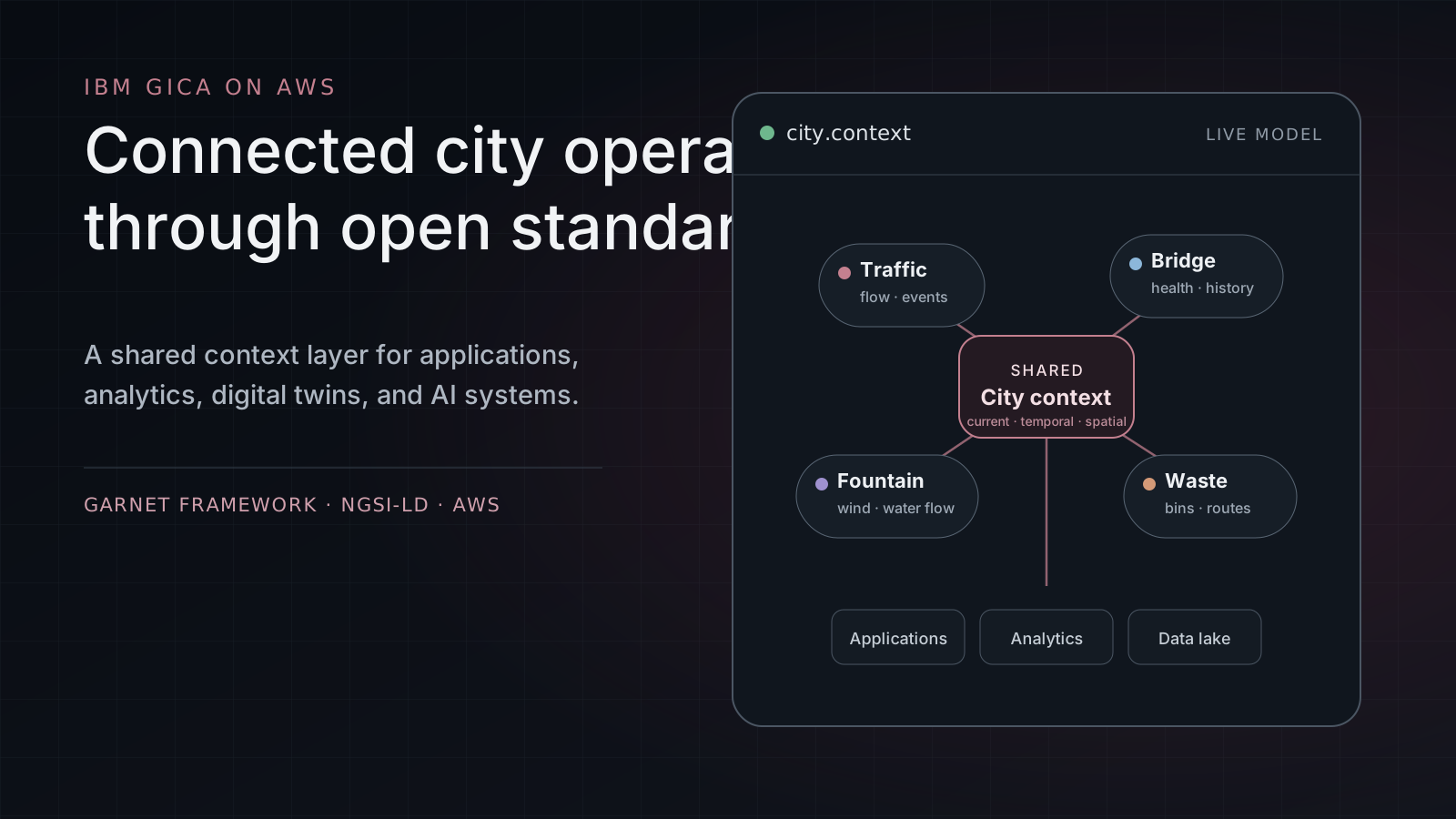
What makes the architecture interesting is not simply the 3D city view. It is what Garnet Framework provides underneath it: a shared operational context connecting assets, observations, relationships, locations, events, and their history through one open information model.
Why the Architecture Matters
A city rarely starts with one platform. Traffic, waste, lighting, buildings, structural monitoring, and citizen services usually have different owners, interfaces, and data models. Each system may work on its own, but operational questions often cross those boundaries.
IBM GICA keeps existing city systems authoritative while Garnet Framework connects the context needed across them. The framework represents assets, observations, events, relationships, locations, and history through a dynamic knowledge graph built on ETSI NGSI-LD.
The 3D city view shown in the source article is one consumer of Garnet Framework. Applications, analytics, digital twins, and AI systems can query or subscribe to the same connected model without rebuilding identities, relationships, and integration logic for every use case.
The Architecture in Four Layers
The IBM and AWS article organizes the solution into four logical layers:
-
Connect existing systems. Municipal databases, IoT platforms, sensors, operational systems, and existing APIs can contribute context to Garnet Framework while remaining authoritative for their data. The reference architecture uses services including Amazon API Gateway, Amazon SQS, Amazon Kinesis Data Streams, Amazon Data Firehose, and AWS IoT Core as integration interfaces.
-
Validate and enrich context. AWS Lambda functions validate and enrich incoming NGSI-LD data before it becomes part of the connected operational model. Derived information can be written back into Garnet Framework so applications and other consumers can reuse it.
-
Manage live and historical context with Garnet Framework. Garnet Framework maintains the current connected state, relationships, spatial context, temporal history, queries, and subscriptions through its NGSI-LD interfaces. It also captures context changes in Amazon S3 for audit, reporting, machine learning, and analysis across larger volumes and longer periods. The current release uses a customized Scorpio implementation internally, but that broker is one component of the broader Garnet Framework architecture.
-
Build context-aware applications. Secure Garnet Framework APIs expose the shared context to dashboards, city services, mobile applications, analytics, digital twins, and AI systems. Each consumer can use the same model of city operations according to its needs.
From One Use Case to a Connected City
The article highlights ornamental fountain management, where wind and water-flow observations can support safer operation, and structural health monitoring, where bridge observations can support earlier maintenance decisions.
The same pattern can extend to waste collection, traffic, smart lighting, municipal energy, emergency response, citizen services, and environmental monitoring.
The useful part is the incremental approach. A city can begin with one operational question and connect only the relevant systems through Garnet Framework. Later use cases can reuse the identities, locations, observations, relationships, and history already modeled instead of starting another isolated data project.
Why the Open Model Matters
NGSI-LD defines how entities, properties, relationships, time, and location are represented and exchanged. Garnet Framework turns that standard into a deployable context-management foundation on AWS, with ingestion, APIs, queries, subscriptions, temporal and geospatial context, monitoring, and an integrated historical data lake.
The standard does not replace domain modeling. Each city still defines the vocabulary and governance appropriate to its operations. It provides a common foundation on which a bridge, inspection, fountain, work order, or citizen request can be modeled consistently.
The Practical Takeaway
The IBM GICA article shows how Garnet Framework can provide the shared context foundation for a broader operational solution. It brings the live dynamic knowledge graph, context-management interfaces, subscriptions, history, and data-lake integration together so the solution does not have to assemble those capabilities independently.
The best place to start is one question that cannot be answered reliably from disconnected data. Identify the people, assets, events, observations, places, and business records involved, then use Garnet Framework to connect the relationships, temporal context, and location required to answer it.
Read the full AWS and IBM article: Create smart city digital twins using IBM GICA on AWS.
You can also explore the Garnet Framework documentation, learn how the NGSI-LD information model works, or review the framework architecture.