Exploring Agentic Twins

Over the last few months, I've been exploring the idea of applying Digital Twin concepts to agents - what I call Agentic Twins.
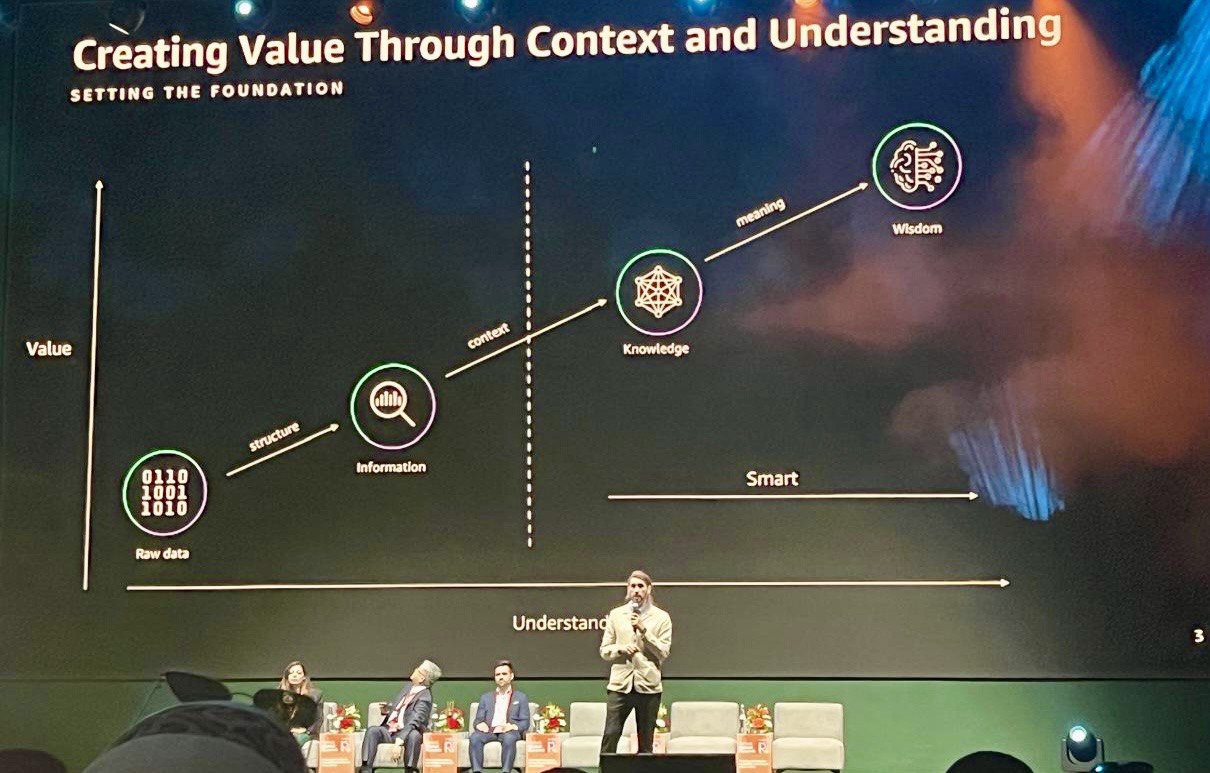
I had the opportunity to present some of my recent work on building digital twins of agents using the Garnet Framework and its underlying open standard at the FIWARE Global Summit 2025.
Why Agentic Twins Matter
As we move toward increasingly complex systems potentially powered by millions of autonomous agents, it's becoming essential to monitor, observe, and model not just the agents themselves, but also their actions, inputs and outputs, and the tools they use. Efficiently orchestrating these agentic systems requires a robust and flexible way to represent and query their state and history.
The challenge grows exponentially when we consider the critical metrics we need to capture for each agent: response latency, decision accuracy, resource utilization, interaction patterns, and even ethical compliance. Without a structured approach to monitoring these metrics, scaling agent systems becomes increasingly difficult.
That's where the NGSI-LD open standard comes in. I believe NGSI-LD provides a strong foundation for modeling agents and their digital twins for several important reasons.
NGSI-LD is based on a property graph meta-model, allowing you to represent entities (like agents), their properties, and their relationships in a flexible, extensible way. This is ideal for capturing the complex, interconnected nature of agentic systems. The standard's cross-domain ontology provides generic building blocks that can be specialized for any domain, including agents.
One of the most valuable aspects of NGSI-LD for agent modeling is its native support for temporal operations. This means you can track not just the current state of an agent, but also its historical data, when properties or relationships changed, and the sequence of events over time. This temporal dimension is particularly valuable for analyzing performance trends, identifying degradation patterns, and optimizing agent behavior based on historical metrics.
As an open standard defined by ETSI, NGSI-LD ensures your models are interoperable across platforms and vendors, avoiding lock-in and making it easier to integrate with other systems.
The standard also enables real-time queries, subscriptions for changes, and efficient federation of data across distributed systems, valuable capabilities for orchestrating fleets of agents in dynamic environments.
Agentic Twins in Physical AI Environments
Beyond software agents, the agentic twins concept extends naturally to physical AI systems that interact with and manipulate the real world. The same NGSI-LD capabilities that make it ideal for monitoring software agents - temporal context, relationship modeling, and real-time updates - become even more valuable when applied to robots and other physical systems.
Consider a fleet of autonomous robots in a warehouse. Each robot's agentic twin would track not only operational metrics but also spatial awareness, hardware health status, and interaction history with humans and other robots. This comprehensive digital representation enables safer operation, predictive maintenance, and coordinated behaviors across multiple physical agents.
As these systems become more prevalent in healthcare, manufacturing, and urban infrastructure, agentic twins will be essential for bridging the digital-physical divide, providing the foundation for transparent, efficient operation of increasingly autonomous physical systems.
The Garnet Framework Advantage
The Garnet Framework builds on these strengths, making it easier to create living digital twins of agents and complex systems that continuously mirror real-world changes and interactions. It simplifies the process of maintaining a dynamic knowledge graph, capturing historical data, setting up real-time monitoring, and deploying at scale.
With Garnet, you can implement comprehensive agent observability for both software and physical agents, tracking key performance indicators like:
- Response time and processing latency
- Decision accuracy and confidence scores
- Resource consumption patterns
- Tool usage efficiency
- Interaction frequency and quality
- Error rates and recovery patterns
For software agents, these metrics help optimize decision-making processes and resource allocation. For physical AI systems, they provide crucial insights into real-world interactions, physical constraints, and maintenance needs.
For physical systems, Garnet also offers location tracking capabilities, allowing agents to maintain awareness of their spatial context and relationships with other entities in the environment. This spatial dimension is especially important for mobile agents like robots or autonomous vehicles.
The framework's unified approach to modeling both digital and physical agents creates powerful synergies, enabling seamless coordination between software systems and their physical counterparts. This is particularly valuable in complex environments where digital and physical systems need to work together harmoniously.
Continuing the Exploration
This post offers just an initial overview of the agentic twins concept. I'm continuing to explore this area, particularly focusing on integration with various agent frameworks, practical patterns for agent monitoring and orchestration, and approaches for scaling agent systems effectively.
I look forward to sharing more insights as this work progresses. Stay tuned to the Garnet Framework website for more content on how standardized dynamic knowledge graphs can support AI agent initiatives.
If you're working on similar concepts or have thoughts to share, I'd welcome the conversation as we collectively explore this interesting intersection of digital twins and autonomous agents.